All through middle school, my teachers taught us these stupid ways to take notes, and study for a test. We had to write papers using colored strips with main ideas and supporting details, take Cornell notes, take Cornell notes on how to take number notes, make outlines on sections of the book, highlight the important bits, etc. etc. For somebody who functions better just writing something out without really thinking about it (like I am right now), thse methods were evil, and deserved to go live in Tartarus, along with standardized tests and P.E. class. "Why do we have to use them all the time?" we would complain to the teachers. "They don't use them at the high school, so how will this help us down there?" They always stuck to the same story- they're good to know in case you need them in college, or to study for a test in high school, because it's up to you how you prepare and get good grades. With two teachers right out of college, it was easier to believe that, but none of us really cared that much. We just wanted to stop writing papers by making notecards with one main idea for each one, color-coded for the certain source.
It took me a week after eighth grade ended to realize how right they were.
This summer, I'm studying for the health exit exam at the high school, so that I can test of the class and therefore have room for another elective, like journalism. We got the book and a small study guide, and were told that the test was an AP test, and one of the hardest tests pre-junior year that we would ever take. I heard from somebody who I regard as a genius that it was the most diffult test he had ever taken, and from another that it was a piece of cake. "Come to registration ready to take the semester one exam, and then we'll see who passes and move on to semester two," our AGP coordinator told us. And then we left.
The first thing that came to my mind as I regarded my health book for the first time was to do an outline. I remembered that my sixth and seventh grade science teacher had encouraged us to do outlines all the time, and even showed us this giant book on biology that she had been outlining for years, just for the heck of it. I remembered my eighth grade science teacher leading us through how to create an outline for a study guide, and telling us how she had been asked by her college to duplicate her own study guides as examples. She told us that we only needed a few words to get a point across, and as long as we could understand it, it would be all right. I remembered hours of answering questions at the end of a section in US History and science class, and remembering them just because I had physically written them down. I remembered the nights before math exams, when I would find the sample tests at the back of the book and try to finish them all, as well as the practice problems in every section. I did these things without really thinking about it, and it wasn't the grueling work that came to mind, it was the lessons learned.
It's not like I've been to high school yet or anything, but just outlining a few of the chapters in this health book has brought me to the realization that you really do have to take your own initiative. They taught us these simple skills in elementary school and middle school do that they would be there, ready for us to use, when we needed a source or method in high school or college, and probably methods in high school that are ready for use in college. And college skills that prepare you for the rest of your life. Humans are lifelong learners, and we can't help but absorb things as we go along, and those things will help us for the rest of our personal existance, whether good or bad experiences come with them. I remember things that my violin teacher told me from when I was seven years old, and I still use them today when I'm working on a particularly troublesome spot. I can still recall the instructions I was given in dance class back when I was still in the beginning levels, and I apply those things to what I do every single time I dance nowadays.
Whenever I hear somebody say in a taunting voice, "that's what we learned in kindergarten", I can't help but realize that kindergarten, along with first and second grade, were really the most important years of our lives so far. Everything seems easy now, but back then it was a new challenge day after day, socially and emotionally, with so much to learn about the world. That age is when you learned the alphabet, which is used in language and reading, simple math skills, which you use without even think about it, the basics of sharing, which will get you through so much, and just how to interact with the rest of the world. In a way, those things are just like those stupid Cornell notes; we don't learn the alphabet or how add two and two anymore, but they're still there, spread out in the toolbox of skills for use any time.
And who teaches us these things? Teachers. Adults. Mentors. Parents. It's just the continuous passing of knowledge through generations and generations, and one of the reasons that humans are so spectacular. We just automatically teach one another things, and the ones who have that as an actual job are the ones who should be applauded the most.
The universe is weird when you look at it like this, but it's so amazing the same time.
Sunday, June 30, 2013

Saturday, June 29, 2013
Nannerl Mozart- And Why We Should Care
At least once in his or her lifetime, almost every person living in the United States hears the word Mozart in some way, and almost every life in the United States has been affected by him in some way. Hardly anyone who hasn't studied music knows that Mozart wrote Twinkle Twinkle Little Star, yet we hear it everywhere, in nurseries, homes, and humming on the streets. His music pours out of radios, fills concert halls, and takes up the pages of music books. It's the story that everybody is in awe of; one of the most famous composers ever, the one who started out as a toddler and quickly worked his way to the very top, performing for Europe's very best when he was younger than my younger brother is right now. His father, Leopold Mozart, is less known, but still has entire concerts devoted to him all over the world. They are known as the classic musical family for these reasons. And just like always, everybody forgets Nannerl.
It's hard to forget somebody when you've never heard of her in your life, but Maria Anna Mozart, the "lost" sister of Wolfgang, was once just as, if not more, popular than her younger brother. Their father made sure that both of them were exposed to music in infancy, and she quickly picked up the piano and harpsichord as a young child, and proved to be brilliant. Leopold, bursting with joy, had her play in the finest European cities, showing off her extraordinary talent. Though it isn't exact how different Maria Anna (Nannerl for short) and Wolfgang were in age, it is known that Wolfgang would watch his sister play as a very small child, and soon became interested in the instrument himself. He quickly picked up the piano, and taught himself how to play his sister's pieces at a much younger age. His father, seeing how fast his son learned, rushed into teaching him more, even though he was only about five years old. Suddenly, Nannerl found herself as the accompianist rather than the soloist, and was even restricted from playing the violin most of the time. As the family went on the road, they were both complimented, but she was seen mostly as the sibling of the genius.
It can't be doubted, however, that Nannerl was quite the composer herself. She put her pen to the paper many times, but none of her work is alive today with her name on it specifically, only her brother's. Historians speculate that some of Wolfgang's compositions were indeed Nannerl's, but nothing can be proven, centuries later. Her legacy died down, and she stopped touring as a teenager, staying behind while her brother flew out into the world. Maria Anna Mozart died a blind widow, with her work lost.
The reason for her loss of the spotlight, however, wasn't because of the birth of her brother, or her lack of skills. The two were very good friends as children, and her talen increased as she grew older. It was the society, however, that barred her from every becoming as famous as her brother, and living up to her potential. In the French film Nannerl, la sœur de Mozart (Mozart's Sister in English), it shows Nannerl being repeatedly told not to play the violin because it wasn't proper. When she reminds her father of the work she had written, he scoffs and replies that it was garbage. No matter where they went, she was always considered the pianist, or sometimes singer, and nothing more. After reaching the marrying age, she wasn't allowed to go out into the world anymore to perform, and began her life as a wife and mother instead. This can't help but make you wonder that if the Mozarts' first born child had been a boy, he would have become one of the greatest composers of all time as well.
Nannerl is lucky that there are still people who remember her, and that books and films have been produced on her life. Though none of her work exists with her name on it, she gets the credit for inspiring her brother, and is remembered in a sympathetic sense. But how many more Nannerls were there in music history? Today, many violinists are women, but most of the pieces they play are by male composers only. People say that a woman is beind every successful man, but how many women were there really that we don't know about? How many other people could have been successful and famous, if only they had been born a different gender?
Nannerl's story doesn't just deserve sympathy; it should be a wake-up call, to look around and remember the great women musicians in the world. Even Elizabeth I was a known pianist in court, along with her other siblings, and Jeanne Antoinette Poisson, otherwise known as Madame de Pompadour in Versailles, was celebrated as a musician of her time. And one cannot forget the more modern Nadia Boulanger, and the also French Elisabeth-Claude Jacquet de la Guerre. Unfortunately, one does forget them, and instead focuses on the male composers of history. In school we did a project on composers and musicians pre-1970, and nobody chose a female pre-1900.
She was a Mozart, just like her brother, and just as talented as a child. The next time you hear Mozart pouring out of the radio, think of Maria Anna, and remember her contribution.
Kat, I saw your post about Mozart and was suddenly inspired. I didn't mean to copy or anything, but I guess it's Mozart day or something. :)
It's hard to forget somebody when you've never heard of her in your life, but Maria Anna Mozart, the "lost" sister of Wolfgang, was once just as, if not more, popular than her younger brother. Their father made sure that both of them were exposed to music in infancy, and she quickly picked up the piano and harpsichord as a young child, and proved to be brilliant. Leopold, bursting with joy, had her play in the finest European cities, showing off her extraordinary talent. Though it isn't exact how different Maria Anna (Nannerl for short) and Wolfgang were in age, it is known that Wolfgang would watch his sister play as a very small child, and soon became interested in the instrument himself. He quickly picked up the piano, and taught himself how to play his sister's pieces at a much younger age. His father, seeing how fast his son learned, rushed into teaching him more, even though he was only about five years old. Suddenly, Nannerl found herself as the accompianist rather than the soloist, and was even restricted from playing the violin most of the time. As the family went on the road, they were both complimented, but she was seen mostly as the sibling of the genius.
It can't be doubted, however, that Nannerl was quite the composer herself. She put her pen to the paper many times, but none of her work is alive today with her name on it specifically, only her brother's. Historians speculate that some of Wolfgang's compositions were indeed Nannerl's, but nothing can be proven, centuries later. Her legacy died down, and she stopped touring as a teenager, staying behind while her brother flew out into the world. Maria Anna Mozart died a blind widow, with her work lost.
The reason for her loss of the spotlight, however, wasn't because of the birth of her brother, or her lack of skills. The two were very good friends as children, and her talen increased as she grew older. It was the society, however, that barred her from every becoming as famous as her brother, and living up to her potential. In the French film Nannerl, la sœur de Mozart (Mozart's Sister in English), it shows Nannerl being repeatedly told not to play the violin because it wasn't proper. When she reminds her father of the work she had written, he scoffs and replies that it was garbage. No matter where they went, she was always considered the pianist, or sometimes singer, and nothing more. After reaching the marrying age, she wasn't allowed to go out into the world anymore to perform, and began her life as a wife and mother instead. This can't help but make you wonder that if the Mozarts' first born child had been a boy, he would have become one of the greatest composers of all time as well.
Nannerl is lucky that there are still people who remember her, and that books and films have been produced on her life. Though none of her work exists with her name on it, she gets the credit for inspiring her brother, and is remembered in a sympathetic sense. But how many more Nannerls were there in music history? Today, many violinists are women, but most of the pieces they play are by male composers only. People say that a woman is beind every successful man, but how many women were there really that we don't know about? How many other people could have been successful and famous, if only they had been born a different gender?
Nannerl's story doesn't just deserve sympathy; it should be a wake-up call, to look around and remember the great women musicians in the world. Even Elizabeth I was a known pianist in court, along with her other siblings, and Jeanne Antoinette Poisson, otherwise known as Madame de Pompadour in Versailles, was celebrated as a musician of her time. And one cannot forget the more modern Nadia Boulanger, and the also French Elisabeth-Claude Jacquet de la Guerre. Unfortunately, one does forget them, and instead focuses on the male composers of history. In school we did a project on composers and musicians pre-1970, and nobody chose a female pre-1900.
She was a Mozart, just like her brother, and just as talented as a child. The next time you hear Mozart pouring out of the radio, think of Maria Anna, and remember her contribution.
Kat, I saw your post about Mozart and was suddenly inspired. I didn't mean to copy or anything, but I guess it's Mozart day or something. :)
Thursday, June 27, 2013
(Somebody's) Top Five Antagonists
A story wouldn't be complete without an antagonist, to shake things up a little bit, and add the chair-gripping element of fear and surprise. This crucial character can be a mere friend who plots against the others in a subtle way, and actual crook with a criminal background, or the stereotypical evil-person, who has no heart and kills everything in his or her path. This list of villains isn't something you'd see on anybody else's blog, because nobody would think of all of these, but at least you can see where I'm coming from.
 Gollum, Lord of the Rings- The mislead poor creature who wants to help his friends, or the malevolent monster with a corrupted mind, who wants the ring all for himself? Undoubtedly suffering from schizophrenia, Gollum/Smeagol is one of the most interesting villains of all time, being a crook, a murderer, and a helpful navigator all at the same time. Half the time he can't even remember who is, or used to be, only that there is something that he dearly needs, and it was stolen from him. Yet as Gollum begins his journey to retrieve his precious, something starts to show inside of him, whether it is remorse or sorrow or just plain guilt-or is it any of those at all? One minute you feel sorry for him, and the next you hate him, and wish that he would just fall into a fiery pit. No matter which it is, though, Gollum makes you think, through riddles and clues hidden in plain sight, and can reflect the minds of ourselves at times.
 Cal Hockley, Titanic- No Titanic drama would be complete without a love angle of some sort (it's an angle, not a triangle. Try to draw one and you'll see what I mean), a scandal that was considered the end of the world in 1912, or a crime on board. James Cameron's 1997 Titanic has all of those (which is probably why it won so many awards from a modern audience), but the character that really makes all these pieces fit together is none other than the miser Cal Hockley, or as I call him, Count Rubenstein, which is a really long story. Obsessed with money, even though he already has an ample supply, Cal is engaged to the beautiful, young Rose DeWitt Bukater, who despises him despite what her mother says. It soon becomes apparent that though he buys her jewels beyond her dreams, he doesn't care for her either, or at least not as much as he cares for money, even though it is their marriage that will solve the Bukaters' problems. After several sneaky attempts to shake off the young and poverty-stricken Jack Dawson, Cal resorts to shooting at the couple, leading them (again) to their almost-deaths. After realizing that his diamond is gone, he goes off and steals a child to allow him onto a lifeboat. How many arrest counts would there be there? It's hard to find any mercy to show him, and you're almost happy when you find out that he killed himself a few years later. The curious thing about Cal, however, is that he's not evil just for the sake of being evil. He's evil because he's a jerk, and it's as simple as that.
Now would be a really good time to tell you that there are probably some major spoilers in this. If you haven't seen Titanic, then shame on you (just kidding. Maybe). But if you haven't seen the faces in the pictures, then don't read it. Or if you have, and don't want to know what happens next, then DON'T READ IT.

Hilly Holbrook, The Help- There's no way that you could
charge Hilly with anything in specifics, since she was living the life that probably thousands of young women did in the 1960's, but there's something that just can't stop you from hating her. So sure that her race is superior, far above that of her maids, she goes to great lengths to stop them from getting the correct treatment, and even greater lengths to make sure they get the worst treatment. Hilly is obsessed with herself and her reputation, and will stop at nothing to ensure that it is stabilized, even if it includes drafting her own bill to require a "black" bathroom for the maids in a white home. The horrible thing that you realize about this book/movie, however, is that Hilly did so many horrible things to the people in Jackson, but there were so many others like her, and those stories didn't have happy endings.
 The Master, Doctor Who- I'll have to admit, the Master is one of my favorite villains, just because he's so completely psycho. After regenerating from the form of the old Professor Yana, locked away in a body, forgetting who he really was, the younger-looking new incarnation sprung up from the ashes, looking like a maniac. The next time you see him, he's the prime minister of England, and starts inviting aliens to Earth. After that, he pops up again about a year later, with a giant craving for food, which leads him to start muttering to himself, which leads to a schizophrenic psychopath breakdown (I seem to like schizophrenic characters). What I find interesting about the Master, though, is that in his second appearance in the new series, he's so much different, and you realize that he may not be as evil as you think he is, just really messed up and willing to kill everybody on planet Earth. He's been insane ever since he was a child, and you have to give him credit for that, especially when the most unlikely possibility turns out to be the new villain. Still, you can't forget what he did to the Doctor and so many others before (in short, torture), and you have no room in your mind for remorse for weirdos. Hitler was messed up, too.
 Bellatrix Lestrange, Harry Potter- Speaking of pyschopaths.... :) There's a reason that I'm not writing about Voldemort, and it's that he's way too obvious. The most popular villain of all time, yada yada yada. It's true that Bellatrix is kind of overdone, too, but she really is just crazy, and that's what makes her so interesting. While she was so horrible to the rest of the world, Bellatrix is one of the only known female Death Eaters, next to Narcissa Malfoy, who would never even come close to her sister's rank. She considers herself Lord Voldemort's greatest worker, although Tom Riddle had never worked well with others, and doesn't have the ability to love. Many Harry Potter fans love Bellatrix Lestrange, thinking of her as the epic evil force with the cool hair, but what she has done cannot be undone. She remains to this day one of my favorite Death Eaters, but I really, really would not want to bump into her in a dark alley.

Ha, ha, this is who I should have done. But then there would be six antagonists, and five is a good round number.
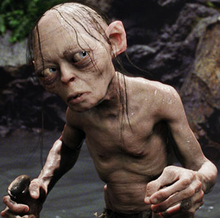 Gollum, Lord of the Rings- The mislead poor creature who wants to help his friends, or the malevolent monster with a corrupted mind, who wants the ring all for himself? Undoubtedly suffering from schizophrenia, Gollum/Smeagol is one of the most interesting villains of all time, being a crook, a murderer, and a helpful navigator all at the same time. Half the time he can't even remember who is, or used to be, only that there is something that he dearly needs, and it was stolen from him. Yet as Gollum begins his journey to retrieve his precious, something starts to show inside of him, whether it is remorse or sorrow or just plain guilt-or is it any of those at all? One minute you feel sorry for him, and the next you hate him, and wish that he would just fall into a fiery pit. No matter which it is, though, Gollum makes you think, through riddles and clues hidden in plain sight, and can reflect the minds of ourselves at times.
  Cal Hockley, Titanic- No Titanic drama would be complete without a love angle of some sort (it's an angle, not a triangle. Try to draw one and you'll see what I mean), a scandal that was considered the end of the world in 1912, or a crime on board. James Cameron's 1997 Titanic has all of those (which is probably why it won so many awards from a modern audience), but the character that really makes all these pieces fit together is none other than the miser Cal Hockley, or as I call him, Count Rubenstein, which is a really long story. Obsessed with money, even though he already has an ample supply, Cal is engaged to the beautiful, young Rose DeWitt Bukater, who despises him despite what her mother says. It soon becomes apparent that though he buys her jewels beyond her dreams, he doesn't care for her either, or at least not as much as he cares for money, even though it is their marriage that will solve the Bukaters' problems. After several sneaky attempts to shake off the young and poverty-stricken Jack Dawson, Cal resorts to shooting at the couple, leading them (again) to their almost-deaths. After realizing that his diamond is gone, he goes off and steals a child to allow him onto a lifeboat. How many arrest counts would there be there? It's hard to find any mercy to show him, and you're almost happy when you find out that he killed himself a few years later. The curious thing about Cal, however, is that he's not evil just for the sake of being evil. He's evil because he's a jerk, and it's as simple as that.
 Now would be a really good time to tell you that there are probably some major spoilers in this. If you haven't seen Titanic, then shame on you (just kidding. Maybe). But if you haven't seen the faces in the pictures, then don't read it. Or if you have, and don't want to know what happens next, then DON'T READ IT.

Hilly Holbrook, The Help- There's no way that you could
charge Hilly with anything in specifics, since she was living the life that probably thousands of young women did in the 1960's, but there's something that just can't stop you from hating her. So sure that her race is superior, far above that of her maids, she goes to great lengths to stop them from getting the correct treatment, and even greater lengths to make sure they get the worst treatment. Hilly is obsessed with herself and her reputation, and will stop at nothing to ensure that it is stabilized, even if it includes drafting her own bill to require a "black" bathroom for the maids in a white home. The horrible thing that you realize about this book/movie, however, is that Hilly did so many horrible things to the people in Jackson, but there were so many others like her, and those stories didn't have happy endings.
 The Master, Doctor Who- I'll have to admit, the Master is one of my favorite villains, just because he's so completely psycho. After regenerating from the form of the old Professor Yana, locked away in a body, forgetting who he really was, the younger-looking new incarnation sprung up from the ashes, looking like a maniac. The next time you see him, he's the prime minister of England, and starts inviting aliens to Earth. After that, he pops up again about a year later, with a giant craving for food, which leads him to start muttering to himself, which leads to a schizophrenic psychopath breakdown (I seem to like schizophrenic characters). What I find interesting about the Master, though, is that in his second appearance in the new series, he's so much different, and you realize that he may not be as evil as you think he is, just really messed up and willing to kill everybody on planet Earth. He's been insane ever since he was a child, and you have to give him credit for that, especially when the most unlikely possibility turns out to be the new villain. Still, you can't forget what he did to the Doctor and so many others before (in short, torture), and you have no room in your mind for remorse for weirdos. Hitler was messed up, too.
 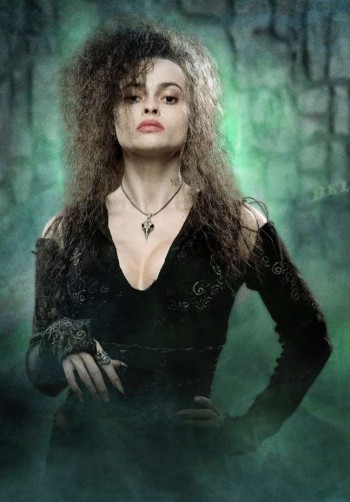 Bellatrix Lestrange, Harry Potter- Speaking of pyschopaths.... :) There's a reason that I'm not writing about Voldemort, and it's that he's way too obvious. The most popular villain of all time, yada yada yada. It's true that Bellatrix is kind of overdone, too, but she really is just crazy, and that's what makes her so interesting. While she was so horrible to the rest of the world, Bellatrix is one of the only known female Death Eaters, next to Narcissa Malfoy, who would never even come close to her sister's rank. She considers herself Lord Voldemort's greatest worker, although Tom Riddle had never worked well with others, and doesn't have the ability to love. Many Harry Potter fans love Bellatrix Lestrange, thinking of her as the epic evil force with the cool hair, but what she has done cannot be undone. She remains to this day one of my favorite Death Eaters, but I really, really would not want to bump into her in a dark alley.
Ha, ha, this is who I should have done. But then there would be six antagonists, and five is a good round number.
Saturday, June 22, 2013
The Sounds of Summer
Out of everywhere I've spent the summer, or at least any time of the year that's not winter and freezing, there have always been little characteristics that make it unique, that would let me know, if I were blind, where in the world I was just because of my memory. Whether I was a small child, a toddler, or a kid about my age now, these little things stuck with me forever, and whenever I hear them, in or out of context, it makes me revert back to this strange dimension of sentimental values.
The Train.
It's the startling background reminder that there is still a world around you as you sit in the green, lush downtown, people bustling everywhere, going about there business. The soft whisper that hangs in the warm urban air, framing the sun as it sinks below the horizon, leaving the world in a cooler atmosphere, a breeze just tickling your skin. The train is going home for the evening, delivering late workers home to their families, and another city day is coming to an end.
The Foghorn.
Living more than half my life on the Oregon coast, and the rest of it in Massachusetts, I've heard plenty of foghorns in my life, whether it was on family trips to Canadian islands, early crabbing expeditions, or searching for orcas at dusk. It's not just because of the name, but the sound of a foghorn reminds me of the stillness of everything. It's a quiet alarm, testing to see if you're still there, only heard when everything is perfectly quiet. The wind is barely a breath over the water, and a seal will occasionally peek its head up, studying you with its big, curious eyes. The whole ocean, grey and motionless, is blanketed with thick fog, that's only beginning to clear. But if you can hear the foghorn, you know that everything will be all right.
The Airplane.
Lying on the beach with my eyes closed, on a damp towel that was once dry, hours ago, I can always rely on hearing the roar of the airplane above me. In Rhode Island, you can count on seeing several airplanes streaking across the sky, large messages flapping out behind them. I used to look up at them, and wonder about the people in them, whether they were from Asia or Europe or just the Boston airport a few hours away. With the crashing of the waves on the beach, and the shouts of children splashing in the shallow water, a plane across the sky screams summer to me. And not just a summer. The Rhode Island summer of my past.
It's all very lovely.

The Train.
It's the startling background reminder that there is still a world around you as you sit in the green, lush downtown, people bustling everywhere, going about there business. The soft whisper that hangs in the warm urban air, framing the sun as it sinks below the horizon, leaving the world in a cooler atmosphere, a breeze just tickling your skin. The train is going home for the evening, delivering late workers home to their families, and another city day is coming to an end.
The Foghorn.
Living more than half my life on the Oregon coast, and the rest of it in Massachusetts, I've heard plenty of foghorns in my life, whether it was on family trips to Canadian islands, early crabbing expeditions, or searching for orcas at dusk. It's not just because of the name, but the sound of a foghorn reminds me of the stillness of everything. It's a quiet alarm, testing to see if you're still there, only heard when everything is perfectly quiet. The wind is barely a breath over the water, and a seal will occasionally peek its head up, studying you with its big, curious eyes. The whole ocean, grey and motionless, is blanketed with thick fog, that's only beginning to clear. But if you can hear the foghorn, you know that everything will be all right.
The Airplane.
Lying on the beach with my eyes closed, on a damp towel that was once dry, hours ago, I can always rely on hearing the roar of the airplane above me. In Rhode Island, you can count on seeing several airplanes streaking across the sky, large messages flapping out behind them. I used to look up at them, and wonder about the people in them, whether they were from Asia or Europe or just the Boston airport a few hours away. With the crashing of the waves on the beach, and the shouts of children splashing in the shallow water, a plane across the sky screams summer to me. And not just a summer. The Rhode Island summer of my past.
It's all very lovely.

Thursday, June 20, 2013
This doesn't even need (or deserve) a title...
I'm sorry that I haven't been blogging much.
I guess that when you don't do anything with your life, you kind of lose inspiration. Well, it's building in there somewhere. Just not yet. Maybe after my friend and I make fudge and I make her watch Downton Abbey tomorrow, there will be inspiration (but probably not). If not, I will entertain you with either pieces I wrote for fun or for school or some random list or book review.
Until then, I will post this. I hope you laugh.

I did.
I guess that when you don't do anything with your life, you kind of lose inspiration. Well, it's building in there somewhere. Just not yet. Maybe after my friend and I make fudge and I make her watch Downton Abbey tomorrow, there will be inspiration (but probably not). If not, I will entertain you with either pieces I wrote for fun or for school or some random list or book review.
Until then, I will post this. I hope you laugh.

I did.
Thursday, June 13, 2013
Swinging
I can very clearly remember the first time that I learned how to "pump" my legs on a swing set.
My parents had hung two blue swings underneath the porch of our house, which was high above the ground, so we could dangle from the ceiling, overlooking the hill. I still have one of the blue swings, which was plastic and had a thick yellow rope as a chain, and the other one I sold to my friend at a garage sale a few years ago. Whenever I go to her house, I look through the window and see it just hanging there, and am reminded of the hours I spent trying to swing high on that thing. I didn't get the concept of pumping, since I thought it was was so much easier to just swing without doing any work. My dad tried to convince me that it was better, but I ignored him and kept on getting pushed. Until the day I actually tried to do it...and then I soared.
The way I see it, swings are the closest that a normal human can get to flying. You don't need a plane or some heavy duty equipment or training; all you need is a rope and a place to hang it, and all of a sudden you're flying like a bird. From the moment you reach the pinnacle of your swoop, and can see for miles around, to when your feet brush the ground, scattering bark chips or dirt everywhere, to the opposite side of the arc, where you can just see over the bar and wonder if you're going to flip over the entire set, it's the most simple yet thrilling experience ever. And people have been doing it for hundreds of years. to feel the wind blowing in your face and the adrenaline pulsing through you. It's a perfect parabola, hitting zero somewhere in the middle and then completing the mirror image on the other side-living math while feeling like a bird.
For me, swings bring a new opportunity. Until my swing (one of the swings I used to have) broke off of the wimpy little tree in my backyard (I moved), I would spend hours out there, thinking and kind of talking to myself, writing and narrating stories in my head. It gave me something to do, and I would fly at the same time. Because I don't have a swing anymore, if you see me walking somewhere and talking to myself, that's why. That swing was my refuge.
It's my dream to someday move into a new house where I can have a giant forest of trees in the backyard, where I can hang all the swings I want. It hasn't happened yet. But it will.

My parents had hung two blue swings underneath the porch of our house, which was high above the ground, so we could dangle from the ceiling, overlooking the hill. I still have one of the blue swings, which was plastic and had a thick yellow rope as a chain, and the other one I sold to my friend at a garage sale a few years ago. Whenever I go to her house, I look through the window and see it just hanging there, and am reminded of the hours I spent trying to swing high on that thing. I didn't get the concept of pumping, since I thought it was was so much easier to just swing without doing any work. My dad tried to convince me that it was better, but I ignored him and kept on getting pushed. Until the day I actually tried to do it...and then I soared.
The way I see it, swings are the closest that a normal human can get to flying. You don't need a plane or some heavy duty equipment or training; all you need is a rope and a place to hang it, and all of a sudden you're flying like a bird. From the moment you reach the pinnacle of your swoop, and can see for miles around, to when your feet brush the ground, scattering bark chips or dirt everywhere, to the opposite side of the arc, where you can just see over the bar and wonder if you're going to flip over the entire set, it's the most simple yet thrilling experience ever. And people have been doing it for hundreds of years. to feel the wind blowing in your face and the adrenaline pulsing through you. It's a perfect parabola, hitting zero somewhere in the middle and then completing the mirror image on the other side-living math while feeling like a bird.
For me, swings bring a new opportunity. Until my swing (one of the swings I used to have) broke off of the wimpy little tree in my backyard (I moved), I would spend hours out there, thinking and kind of talking to myself, writing and narrating stories in my head. It gave me something to do, and I would fly at the same time. Because I don't have a swing anymore, if you see me walking somewhere and talking to myself, that's why. That swing was my refuge.
It's my dream to someday move into a new house where I can have a giant forest of trees in the backyard, where I can hang all the swings I want. It hasn't happened yet. But it will.


Wednesday, June 12, 2013
Going to the Library
I really, really love libraries. Maybe it's just that I really, really love books, but it's also the quiet and calm atmosphere, the endless choices, and the sense that there are so many adventures you could go on, with only the flip of a page. Choose a door and go through it, and experience the world that lies beyond. Or take a few doors home with you and spend a little infinity inside of each of them.
I just got back from the library after my violin lesson, which is right across the street, and pretty much brought back a stack of books that won't really make me smarter or make me think, but books that will keep me entertained for the next few days. Because they teach you about life and are pretty funny, I got an Alice McKinley book, one from her senior year, and a few Babysitters Club books because now I'm older than the girls in those and I can look at them from a different perspective. The prize of this trip were the two John Green books, Looking For Alaska and Paper Towns. I loved The Fault In Our Stars so much, and I've heard great things about these mature but wonderful books, so this will be an interesting next couple of days.
The thing that I've noticed about rereading books over and over again is that you are never lonely. About 4/5 of the books that I mentioned above are ones that I've read before, and I either want to refresh my memory or take the trip back into that world and see what I gain from it this time. I think that's a great way to describe books. Each time you read one, you absorb the words and fall into a new reality, where you are the main character, and feel pain when he or she does, laugh along with the dialogue, and get so wrapped up that you're distrought when it's over. I read To Kill A Mockingbird this year, and plan to read it every year that I can for the rest of my life, to see what else I can learn from the text.
One great example would be Harry Potter. It may sound silly, but I will never feel lonely if I have a Harry Potter book with me. If I'm alone someplace, like at an orchestra rehearsal with a bunch of elderly adults talking about their grandchildren with each other, all I have to do is open up the book and suddenly I'm home. I've read those books hundreds of times, fallen into those worlds on so many occasions, that the words just become part of me after a while, and even though I know what's going to happen next, they're familiar, and that's comforting in a strange but happy little way.
Just being in a library makes me want to just sit there and read forever. It's so quiet, with only little rustlings and keyboard tapping, and the occasional beep of the scanner, that all time just goes away, and you're lost in a whole new dimension, with endless possibilities stretched out in front of you, aisles and aisles of new opportunities and information waiting to be soaked up. Every time I read a book, I learn something new, and feel like a better person. Every time I write, or try to write, a book, I feel like a better person. Words are the most powerful tools that we can have, and the library is full of them.

Every book ever written in the English language is just different combination of 26 letters.
I just got back from the library after my violin lesson, which is right across the street, and pretty much brought back a stack of books that won't really make me smarter or make me think, but books that will keep me entertained for the next few days. Because they teach you about life and are pretty funny, I got an Alice McKinley book, one from her senior year, and a few Babysitters Club books because now I'm older than the girls in those and I can look at them from a different perspective. The prize of this trip were the two John Green books, Looking For Alaska and Paper Towns. I loved The Fault In Our Stars so much, and I've heard great things about these mature but wonderful books, so this will be an interesting next couple of days.
The thing that I've noticed about rereading books over and over again is that you are never lonely. About 4/5 of the books that I mentioned above are ones that I've read before, and I either want to refresh my memory or take the trip back into that world and see what I gain from it this time. I think that's a great way to describe books. Each time you read one, you absorb the words and fall into a new reality, where you are the main character, and feel pain when he or she does, laugh along with the dialogue, and get so wrapped up that you're distrought when it's over. I read To Kill A Mockingbird this year, and plan to read it every year that I can for the rest of my life, to see what else I can learn from the text.
One great example would be Harry Potter. It may sound silly, but I will never feel lonely if I have a Harry Potter book with me. If I'm alone someplace, like at an orchestra rehearsal with a bunch of elderly adults talking about their grandchildren with each other, all I have to do is open up the book and suddenly I'm home. I've read those books hundreds of times, fallen into those worlds on so many occasions, that the words just become part of me after a while, and even though I know what's going to happen next, they're familiar, and that's comforting in a strange but happy little way.
Just being in a library makes me want to just sit there and read forever. It's so quiet, with only little rustlings and keyboard tapping, and the occasional beep of the scanner, that all time just goes away, and you're lost in a whole new dimension, with endless possibilities stretched out in front of you, aisles and aisles of new opportunities and information waiting to be soaked up. Every time I read a book, I learn something new, and feel like a better person. Every time I write, or try to write, a book, I feel like a better person. Words are the most powerful tools that we can have, and the library is full of them.

Subscribe to:
Posts (Atom)